
Table of Contents
ToggleSocial Media Advertising for Home Care Services: A Practical Guide to Reaching More Families
For home care agencies, social media can be one of the most effective ways to introduce your services to families who may not be actively searching for care yet.
That distinction matters.
Someone searching Google for “home care near me” has already identified a need. A family member scrolling through Facebook or Instagram may not be at that stage. They may simply be noticing that an aging parent is having more trouble living independently, learning about respite care for the first time, or trying to understand what support is available after a hospital stay.
Social media advertising gives home care providers an opportunity to reach those families earlier in the decision-making process.
It also creates a unique challenge. Home care marketing involves sensitive subjects, personal family situations, and health-related information. A successful social media strategy needs to reach the right audience without crossing privacy or compliance boundaries.
That means the best home care advertising strategy is not simply about putting more money behind Facebook posts. It requires thoughtful audience targeting, HIPAA-conscious data practices, original content, and a clear understanding of the families you want to reach.
Why Social Media Advertising Matters for Home Care Agencies
Home care is a relationship-driven business. Families want to know who will be entering their loved one’s home, what kind of care they can provide, and whether the agency understands what they are going through.
Social media gives agencies a place to answer those questions before a phone call ever happens.
A strong social media presence can showcase caregivers, explain different types of care, introduce members of your local team, answer common questions, share helpful information, and give families a better sense of what your agency is like.
Paid social advertising expands that reach.
Instead of relying entirely on people who already follow your Facebook or Instagram account, advertising allows you to put your content in front of carefully selected audiences within the geographic areas you serve.
This is especially useful because home care covers a wide range of needs. Agencies may provide companion care and help with daily living activities, personal care, dementia and Alzheimer’s care, respite care, transitional care, chronic disease support, surgery assistance, and end-of-life support. Senior Helpers, for example, highlights many of these service categories as part of its home care offering.
Each service represents a different conversation with a different type of family.
Your social media advertising should reflect that.
Social Media Advertising for Home Care Requires More Than Basic Targeting
A common mistake in social media advertising is relying on broad demographic targeting and assuming that a large audience will automatically produce good results. Selecting a geographic area, choosing an age range, and adding a handful of interests may get an advertisement in front of a lot of people, but reaching a large audience does not necessarily mean reaching the people who are most relevant to your services.
Families looking for home care are not all in the same situation, and your advertising should reflect those differences. An adult daughter researching dementia care for her mother may respond to completely different messaging than a spouse looking for help after surgery, while someone researching respite care may have very different concerns from a family trying to determine whether an aging parent can continue living independently.
This is where audience data can become useful. Rather than treating everyone in a geographic area as equally likely to need home care, marketers can use available audience signals and data sources to build campaigns around the types of people who are more likely to be relevant to the services being promoted.
Understanding Third-Party Data Targeting
Third-party data refers to information collected outside of a company’s own website, customer database, or direct interactions with its audience. Depending on the source and platform, this information can include demographic, geographic, behavioral, consumer, and other audience signals that can help advertisers reach more relevant groups of people.
For home care agencies, the goal should not be to identify specific individuals based on a medical condition or assume that an advertising platform knows someone needs care. Instead, responsible audience targeting should focus on reaching broader groups of people who fit the general characteristics of the agency’s desired audience.
For example, a home care agency may want to reach adults within a specific service area who are more likely to be involved in decisions about senior care. The agency could then create different campaigns based on the services it provides, with separate messaging for areas such as companion care, respite care, dementia support, or transitional care.
This approach gives the advertising strategy more direction than simply showing the same advertisement to everyone within a certain radius.
Why Third-Party Data Requires Extra Care in Home Care Marketing
There is an important distinction between using legitimate audience data for advertising and using sensitive health information to target people based on their medical circumstances.
Home care agencies deal with information that can be highly personal, and businesses need to understand what information they are permitted to use for marketing and how that information can be shared with advertising platforms. HHS explains that covered entities generally need an individual’s authorization before using or disclosing protected health information for marketing, subject to specific exceptions. HHS HIPAA Marketing Guidance
That means a home care agency should never assume that information found online or obtained from a data provider is automatically appropriate to use for advertising simply because it is technically available.
The same consideration applies when working with a digital marketing agency. Agencies should understand where audience data comes from, what permissions apply to that data, how it is transferred, and how it is used once it becomes part of an advertising campaign.
Meta’s current terms for customer-list Custom Audiences also place responsibility on advertisers to have the necessary rights, permissions, and lawful basis to use the information they provide for audience creation. Meta Custom Audience Terms
For home care providers, responsible targeting means finding ways to reach relevant audiences without trying to identify individuals based on protected health information.
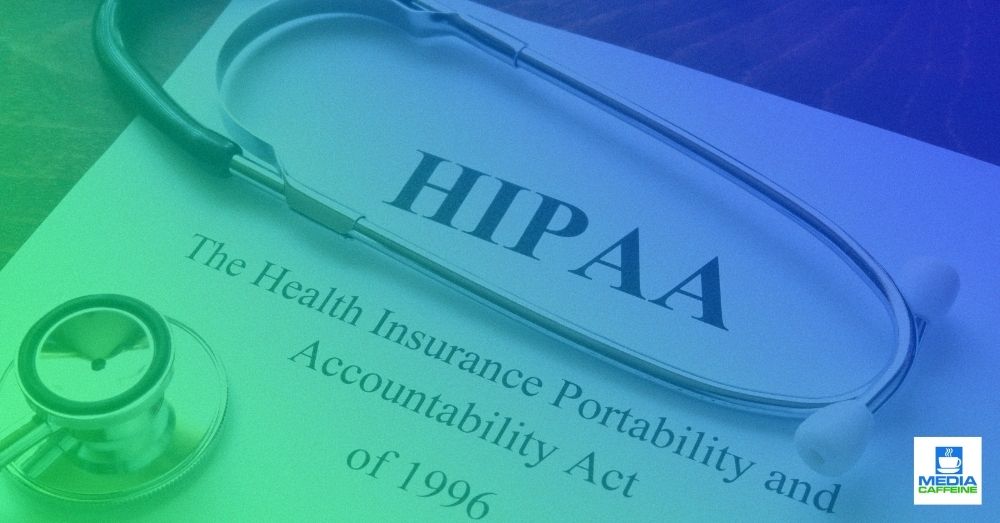
HIPAA and Privacy Should Be Considerations From the Start
HIPAA should not be something a home care agency thinks about only after someone submits a lead form. Privacy considerations should be part of the social media strategy from the beginning, including the way audiences are created, the information used in advertisements, the stories shared on social media, and the data collected through websites and lead forms.
The HHS Privacy Rule places specific restrictions on how protected health information can be used and disclosed for marketing purposes. For covered entities, marketing uses of PHI generally require authorization unless an exception applies. HHS HIPAA Marketing Guidance
For marketing teams, that means the safest approach is to build campaigns around services, education, and general audience characteristics rather than attempting to create advertising audiences based on private medical information.
Avoid Advertising That Implies You Know Someone’s Medical Situation
The wording of an advertisement can make a significant difference.
An advertisement that says, “Is your mother suffering from Alzheimer’s?” creates the impression that the advertiser knows something personal about the person seeing the ad. An educational advertisement discussing common challenges families face when caring for someone with dementia communicates the subject without suggesting that the advertiser has access to the individual’s health information.
The same principle applies to other services. Instead of trying to tell someone that they personally need care, advertising can explain the situations in which home care may be helpful and provide information that allows families to decide whether the service is appropriate for them.
This approach also produces better content because it focuses on answering questions rather than making assumptions about the person viewing the advertisement.
Be Careful With Client Stories and Testimonials
Real client stories can be extremely valuable for a home care agency because they provide prospective families with a better understanding of the experience they can expect. They also need to be handled carefully.
Before publishing a client’s story, photograph, testimonial, video, or other identifiable information, agencies should make sure they have the appropriate permission and are following their privacy policies and applicable legal requirements.
A positive experience does not automatically mean it can be turned into a social media advertisement. When client stories are used, they should be shared with the proper consent and with respect for the privacy of the person and family involved.
Review Your Website and Advertising Tracking
Privacy concerns can extend beyond the advertisements themselves. Home care agencies should understand what information is collected through website forms, analytics platforms, tracking technologies, customer relationship management systems, and advertising platforms.
The FTC has also addressed the handling of consumer health information and has warned businesses about practices involving the collection and sharing of sensitive health information. Some of these obligations can apply even when an organization is not covered by HIPAA. HHS HIPAA and FTC Act Guidance
Because of that, a home care agency should review its overall digital marketing setup rather than treating social media advertising as an isolated activity.
Custom Content Is One of the Most Important Parts of Home Care Social Media
Audience targeting can help an advertisement reach the right people, but the content is what gives those people a reason to pay attention.
Home care is personal, which makes generic advertising especially easy to ignore. A stock photo of an older couple sitting on a couch may technically represent the industry, but it does not tell a prospective family anything about your agency. The same is true for generic social media posts that could have been published by dozens of other home care companies.
Original content gives an agency the opportunity to show what makes its team and approach different.
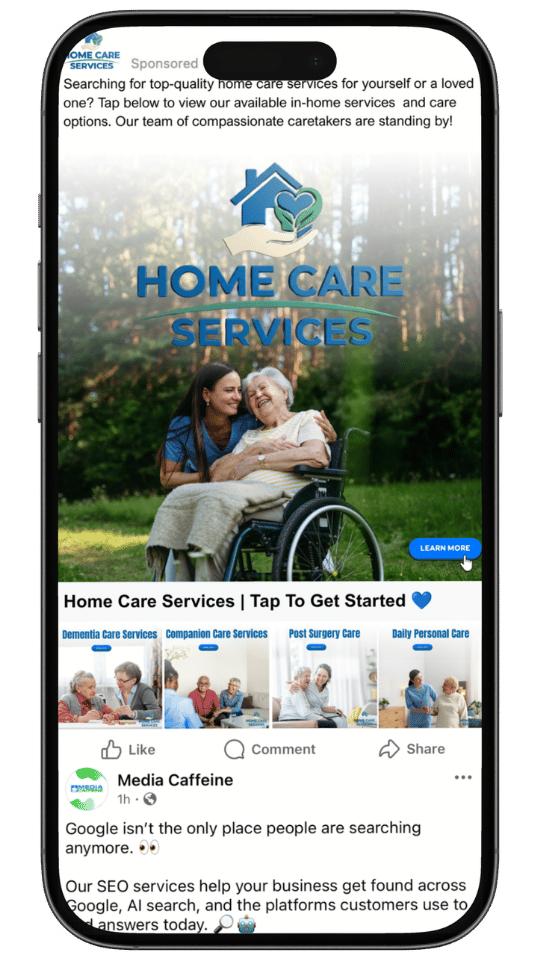
Show the People Who Actually Provide the Care
Caregivers are a major part of a home care agency’s identity, and social media provides a natural opportunity to introduce them.
Instead of relying on stock photography for every post, agencies can feature members of their team, explain what brought them into home care, highlight milestones, introduce office staff, share community involvement, and show what day-to-day life is like within the organization.
That type of content gives prospective families something more useful than a polished advertisement. It gives them an opportunity to see the people they may eventually be trusting with the care of someone they love.
Turn Real Questions Into Social Media Content
Some of the best social media content ideas are already being discussed by your staff every day.
If families regularly ask how an in-home assessment works, create a post explaining the process. If people frequently ask what companion care includes, make a short video addressing the question. If caregivers regularly hear concerns about respite care, create educational content that explains how respite services can support family caregivers.
Those real questions are valuable because they reflect what families actually want to know. Instead of trying to come up with endless social media topics from scratch, home care agencies can build a content strategy around the conversations already happening between their team and prospective clients.
Why Handmade Content Can Be More Effective Than Generic AI Content
AI tools can be useful for brainstorming, organizing ideas, and assisting with certain marketing tasks, but that does not mean every social media post should be generated by AI.
Home care agencies have real people, real communities, real employees, and real experiences that a generic AI-generated post cannot recreate. When every agency in a market is publishing polished but interchangeable content, the businesses that show their actual personality and experience have an opportunity to stand apart.
Custom content should be created around the agency itself. That can mean filming a caregiver answering a common question, photographing a local community event, interviewing a member of the care team, or writing an educational post based on a question your staff hears every week.
The point is not to avoid technology for the sake of avoiding technology. It is to make sure technology does not replace the human voice that makes a home care agency worth choosing.
Ready to Build a Better Social Media Strategy for Your Home Care Agency?
Social media advertising can help home care agencies reach families earlier in the decision-making process, but the strategy needs to be built around the realities of the industry. Responsible audience targeting, careful handling of data, HIPAA-conscious marketing practices, and original content all play a role in creating campaigns that feel relevant without becoming intrusive.
At Media Caffeine, we help businesses develop digital marketing strategies that are built around their specific goals, audience, and market. For home care agencies, that means creating social media campaigns that put the focus on useful information, authentic content, and reaching the people most likely to need the services you provide.
If your current social media advertising feels generic, or you are unsure whether your campaigns are reaching the right audience, it may be time to take a closer look at your strategy.
Frequently Asked Questions About Social Media Advertising for Home Care
Is Facebook advertising effective for home care agencies?
Facebook can be a valuable advertising channel for home care agencies because it allows businesses to reach defined geographic audiences with educational, service-focused, and community-oriented content. The effectiveness of a campaign depends on factors such as audience selection, creative quality, budget, geographic coverage, campaign goals, and how quickly the agency responds to inquiries.
Can home care agencies use third-party data for social media advertising?
Third-party data can be used when it has been obtained and provided for advertising in a lawful and appropriate manner. Home care agencies should not use protected health information or improperly obtained health information to create advertising audiences. Meta’s customer-list audience terms require advertisers to have the necessary rights, permissions, and lawful basis to use the information they provide for audience creation. Meta Custom Audience Terms
Is social media advertising for home care HIPAA compliant?
Social media advertising can be structured around applicable privacy and HIPAA requirements, but whether a specific campaign or marketing system is compliant depends on how information is collected, stored, disclosed, and used. HHS explains that covered entities generally need authorization before using or disclosing protected health information for marketing, subject to certain exceptions. HHS HIPAA Marketing Guidance
Home care agencies should consult qualified legal or compliance professionals regarding their specific obligations.
What should home care agencies post on social media?
Home care agencies have plenty of opportunities to create useful social media content, including caregiver introductions, answers to frequently asked questions, explanations of specific services, educational information, community involvement, company updates, family caregiver resources, and appropriately authorized client stories.
Should home care agencies use AI to create social media content?
AI can assist with brainstorming and other marketing tasks, but agencies should be careful about allowing AI-generated content to replace their actual voice. Custom content featuring real employees, real experiences, local communities, and the agency’s own expertise can create a more authentic social media presence than generic content produced for the entire industry.
What social media platforms should home care agencies advertise on?
Facebook and Instagram are natural starting points for many home care agencies because both platforms provide opportunities for organic content and paid advertising. The right mix depends on the agency’s audience, geographic market, services, budget, goals, and existing social media activity.
How much should a home care agency spend on social media advertising?
There is no single advertising budget that makes sense for every home care agency. The appropriate amount depends on the size of the service area, the local competitive landscape, the agency’s goals, the number of services being promoted, and its ability to handle new inquiries. A good starting strategy is to establish a budget that provides enough data to evaluate the campaign without spending beyond what the agency can reasonably support.