
Table of Contents
ToggleStop Chasing Followers and Start Building Communities
Social media has changed significantly over the past few years. Businesses once treated follower growth as one of the most important signs that their social media strategy was working. While having a larger audience can certainly be beneficial, the number of people who follow your business does not tell you how many are actually paying attention, interacting with your content, or considering your business when they need what you offer.
For small businesses, this distinction is especially important. A local jewelry store does not need hundreds of thousands of followers to generate business from Instagram or Facebook. An HVAC company does not need a viral video to become the company a homeowner calls when the air conditioner stops working. A senior care agency does not need a massive audience to become a trusted resource for families in its local community.
What these businesses need is an audience that has a reason to pay attention and a relationship with the brand that develops over time. That is where community building becomes an important part of a modern social media marketing strategy.

What Does Building a Community on Social Media Actually Mean?
A social media community is made up of people who have developed an ongoing connection with your business and the content you share. They may be current customers, potential customers, local residents, industry professionals, employees, or people who simply find your content useful and relevant.
The relationship goes beyond someone clicking the Follow button. People who are part of a community are more likely to comment on your posts, ask questions, share your content, send direct messages, recommend your business, participate in conversations, and return to your social profiles because they find value in what you provide.
That does not mean follower growth is irrelevant. Having a relevant audience gives your business more opportunities to reach people organically, and a growing audience can be a healthy sign when it comes with meaningful engagement. The problem occurs when follower count becomes the primary objective and the business stops asking whether those followers actually have an interest in the company.

Followers Are Only One Part of Your Audience
It is easy to look at a social media profile and judge its success based on the number displayed beneath the account name. A business with 15,000 followers can appear to be doing better than a competitor with 2,000 followers, but that number does not tell the entire story.
Some followers may have discovered the business years ago and rarely see or interact with its content. Others may live outside the company’s service area or have followed because of a particular post that happened to appear in their feed. A large audience can therefore include many people who are unlikely to become customers.
For a small business, the quality and relevance of an audience are much more important than simply making the number bigger.
A Community Develops Through Ongoing Interaction
Community building happens when people have a reason to keep coming back to your business. That reason will look different depending on the industry.
A plumbing company might become a trusted source for homeowners who regularly use its maintenance tips and turn to the company when they have questions about their plumbing systems. A jewelry store might develop a following around engagement ring education, new collections, customer stories, and the experience of shopping for an important piece of jewelry. A senior care agency might provide educational content that helps families better understand caregiving, aging, and the services available to them.
In each case, the business is giving people something useful or meaningful before they ever ask for a sale.

Why Community Building Matters for Small Businesses
Community building has become an increasingly important part of social media marketing because consumers have more choices than ever when deciding which businesses to trust. People can compare companies, read reviews, watch videos, look at customer experiences, and interact with brands long before they ever make a phone call or walk through the front door.
HubSpot’s 2026 social media research found that 85% of marketers consider building an active online community important to a successful social media strategy, while 40% plan to increase their investment in community building.
For small businesses, this creates an opportunity to compete through familiarity and relationships rather than simply trying to outspend larger companies.
Community Helps People Become Familiar With Your Business
Most people are not thinking about hiring a plumber, replacing an HVAC system, buying an engagement ring from a jewelry store, or choosing a senior care provider every day. Your business may only become relevant to them when a specific need arises.
That is why staying visible over time matters.
Someone who has regularly seen helpful content from your HVAC company may remember your name when their air conditioner stops working in July. A person who has followed a local jewelry store and enjoyed its educational content may think of that store when they begin shopping for an engagement ring. A family that has spent months seeing useful information from a senior care agency may feel more comfortable reaching out when they need assistance.
Community building helps keep your business familiar before the customer is ready to buy.
Community Helps Establish Trust
Trust is particularly important for small businesses because many purchases involve a significant financial investment or require customers to place confidence in the company’s expertise.
A homeowner wants to know that the HVAC technician arriving at their house understands the problem and will recommend an appropriate solution. Someone shopping for an engagement ring wants to feel confident that the jeweler is knowledgeable and trustworthy. Families considering senior care want to know that the organization they choose will treat their loved one with professionalism and compassion.
Social media gives businesses an opportunity to demonstrate those qualities over time. Educational content, employee introductions, customer stories, behind-the-scenes posts, and thoughtful responses to questions can all contribute to a stronger sense of trust.
Community Can Create More Valuable Conversations
One of the advantages of building an engaged social media audience is that it creates opportunities for conversations that would not happen through traditional advertising alone.
When someone comments on a post with a question about water heater maintenance, asks about a particular diamond cut, or wants to learn more about senior care services, the business has an opportunity to provide an answer and potentially begin a relationship with that person.
Those conversations can also provide useful information to the business. Questions from customers can reveal topics that deserve future content, services that people may not understand, or concerns that are influencing purchasing decisions.
Need Help Building Your Community?
Building a social media community takes more than filling a content calendar. Your strategy needs to reflect your business, your customers, your local market, and the goals you want your marketing to accomplish.
At Media Caffeine, we help small businesses develop and manage digital marketing strategies that connect with real customers. We work with businesses across a wide range of industries, including jewelry stores, senior care agencies, HVAC companies, plumbing companies, roofing companies, home care providers, and other small businesses throughout North America.
Our social media services can include strategy, content creation, social media management, paid social advertising, community engagement, and performance reporting. We take the time to understand what makes your business different so your social presence can reflect the actual company behind the account.
Social media should be part of a larger marketing strategy that helps your business attract attention, build trust, generate leads, and stay connected with customers. If your current strategy is focused primarily on gaining followers, it may be worth taking a closer look at whether those followers are becoming an engaged audience.
Media Caffeine can help you build a social media strategy focused on the people who matter most to your business.
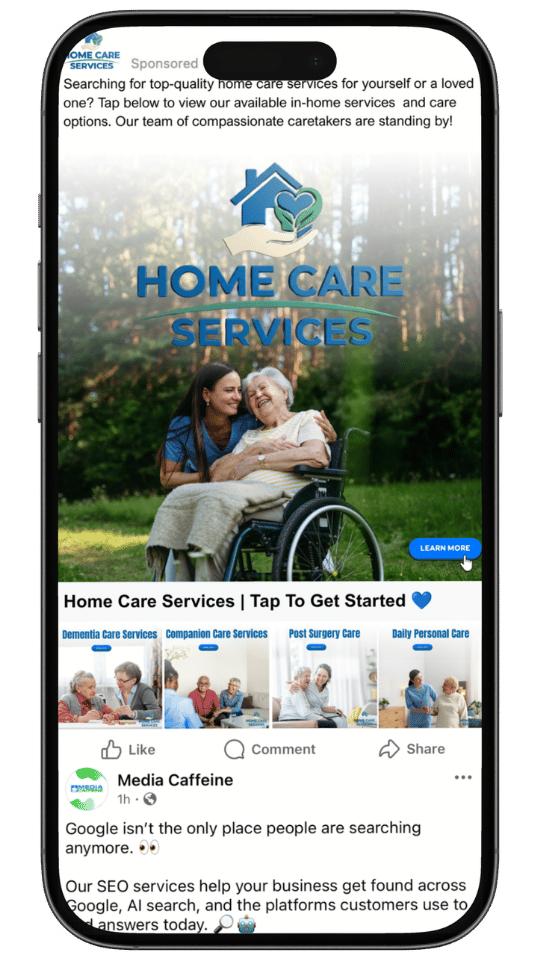
Social media advertising can help home care agencies reach families earlier in the decision-making process, but the strategy needs to be built around the realities of the industry. Responsible audience targeting, careful handling of data, HIPAA-conscious marketing practices, and original content all play a role in creating campaigns that feel relevant without becoming intrusive.
At Media Caffeine, we help businesses develop digital marketing strategies that are built around their specific goals, audience, and market. For home care agencies, that means creating social media campaigns that put the focus on useful information, authentic content, and reaching the people most likely to need the services you provide.
If your current social media advertising feels generic, or you are unsure whether your campaigns are reaching the right audience, it may be time to take a closer look at your strategy.
Frequently Asked Questions About Building Social Media Communities
Is follower count still important for small businesses?
Follower count can be a useful metric because it shows how many people have chosen to follow your business, but it should be considered alongside engagement and business results. A smaller audience that regularly interacts with your content and becomes customers can be more valuable than a much larger audience with little interest in your business.
How can a small business build a social media community?
Start by understanding what your target customers actually want from your social media presence. Create useful and relevant content, encourage conversations, respond to comments and messages, feature customers and employees, participate in your local community, and maintain a consistent presence. Over time, these activities can help turn an audience into a more engaged community.
What type of content gets the most engagement on social media?
There is no single content type that performs best for every business. Educational content, customer stories, behind-the-scenes content, local information, videos, questions, and useful tips can all encourage engagement when they are relevant to the audience. Testing different formats and reviewing your performance data can help identify what resonates with your customers.
How often should a small business post on social media?
The right posting frequency depends on the business, audience, platform, and available resources. Consistency is generally more important than posting as frequently as possible. A sustainable schedule that allows you to publish quality content and actively respond to your audience is usually more effective than posting frequently without a clear strategy.
Should small businesses focus on engagement or followers?
Both can be useful, but engagement provides more information about how your audience is responding to your content. Follower growth is most valuable when you are attracting people who are actually relevant to your business and have the potential to become customers, advocates, or long-term members of your community.
Can social media communities help generate leads?
Yes. An engaged social media audience can contribute to lead generation through direct messages, website visits, referrals, social media advertising, customer recommendations, and increased brand recognition. Connecting social media metrics with actual inquiries, appointments, sales, and other business outcomes can help you understand the value of your social media investment.
What social media platforms are best for small businesses?
The best social media platforms depend on your industry, target audience, content strategy, and business goals. Facebook and Instagram can be particularly useful for many local businesses, while TikTok, YouTube, LinkedIn, and other platforms can provide opportunities depending on where your customers spend their time. A focused strategy on the platforms that make sense for your business is generally more useful than trying to maintain a presence everywhere.
Should a small business use paid social media advertising?
Paid social media advertising can complement organic community building by helping businesses reach specific audiences and put their products, services, offers, or content in front of potential customers. The strongest results typically come when paid advertising and organic social media are treated as complementary parts of the overall marketing strategy rather than completely separate efforts.